2026 Notary Study Guide
Utah Notary Public
Exam Practice Test
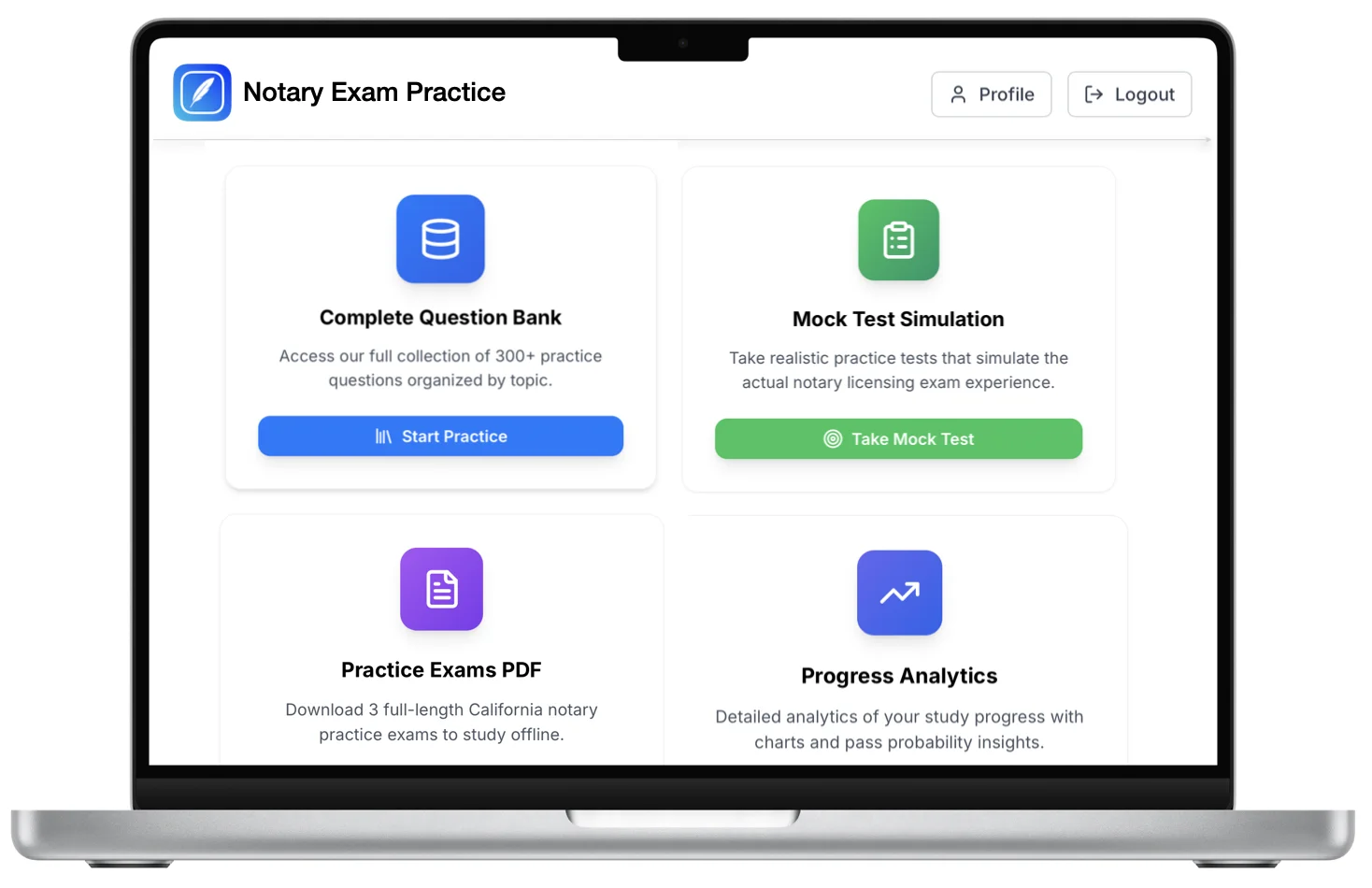
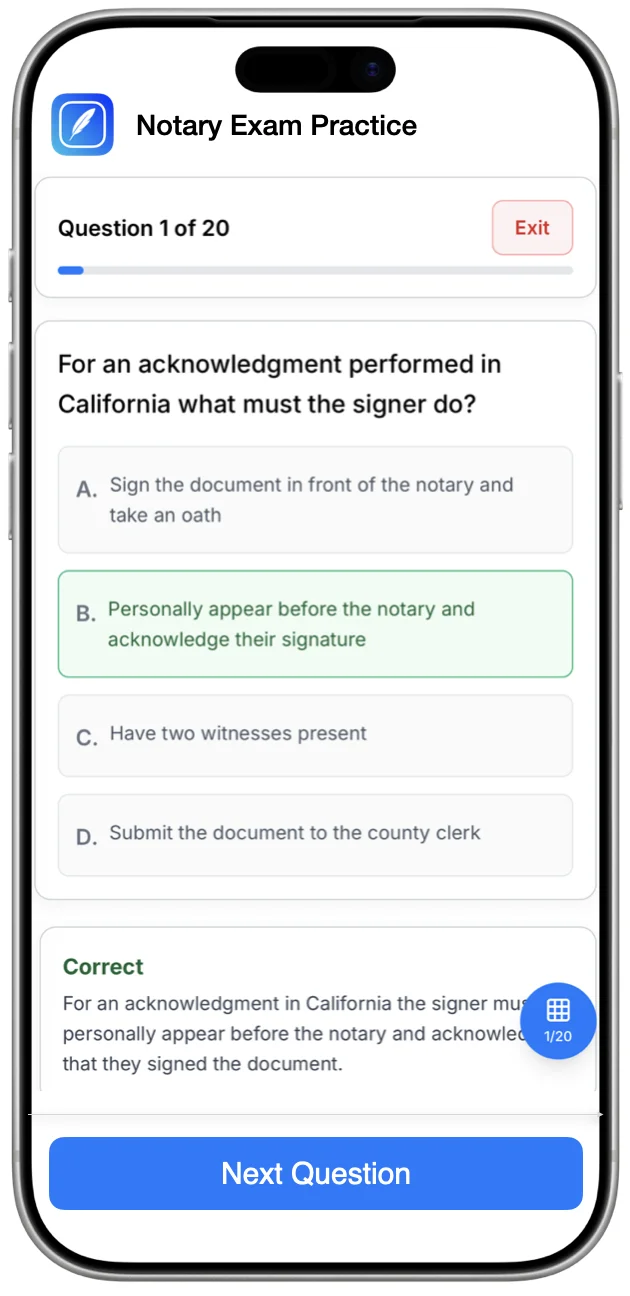
Pass your Utah Notary Public exam on the first try! Practice with 200+ Utah-specific questions, 30-question mock exams, and instant explanations. Focus on notarial certificates, signer identification, journal practices, prohibited conduct, and the current Utah Notary Public Study Guide.
No signup required • No ads • Start immediately
Exam strategy
How to Pass the Utah Notary Public Exam
The Utah Notary Public exam consists of 25 multiple-choice questions and requires a score of 20 or higher (80%) to pass. Prepare by studying the Utah Notary Public Reference Guide published by the Secretary of State — every question is sourced from Utah notary statutes. Focus on the types of notarial acts, proper certificate language, journal requirements, acceptable signer identification, and the penalties for notarial misconduct. Practicing with Utah-specific questions under timed conditions will give you the accuracy and confidence needed to pass on your first attempt.
Study smarter, pass faster
Master Your Utah Notary Public Exam
Learn from expert insights and avoid the most common pitfalls that trip up test-takers in Utah, and master key terms in our Glossary.
Study Tips
Expert strategies for success
Study Utah Code § 46-1
Utah notary law is governed by Utah Code § 46-1. Every exam question is drawn from this statute — read it thoroughly before practicing.
Focus on notarial acts
Acknowledgments, jurats, oaths, and affirmations are heavily tested. Know the difference and the requirements for each.
Practice with Utah-specific mock tests
Use our Utah-specific question bank to simulate the real exam and identify areas where you need improvement.
Review penalties for misconduct
Utah notary law includes specific penalties for misconduct. Understanding these rules helps on exam day and in practice.
Common Mistakes
Pitfalls to avoid on test day
Acknowledgments vs. Jurats
Many test-takers confuse acknowledgments and jurats — knowing when each is appropriate is essential for the Utah notary exam.
Journal requirements
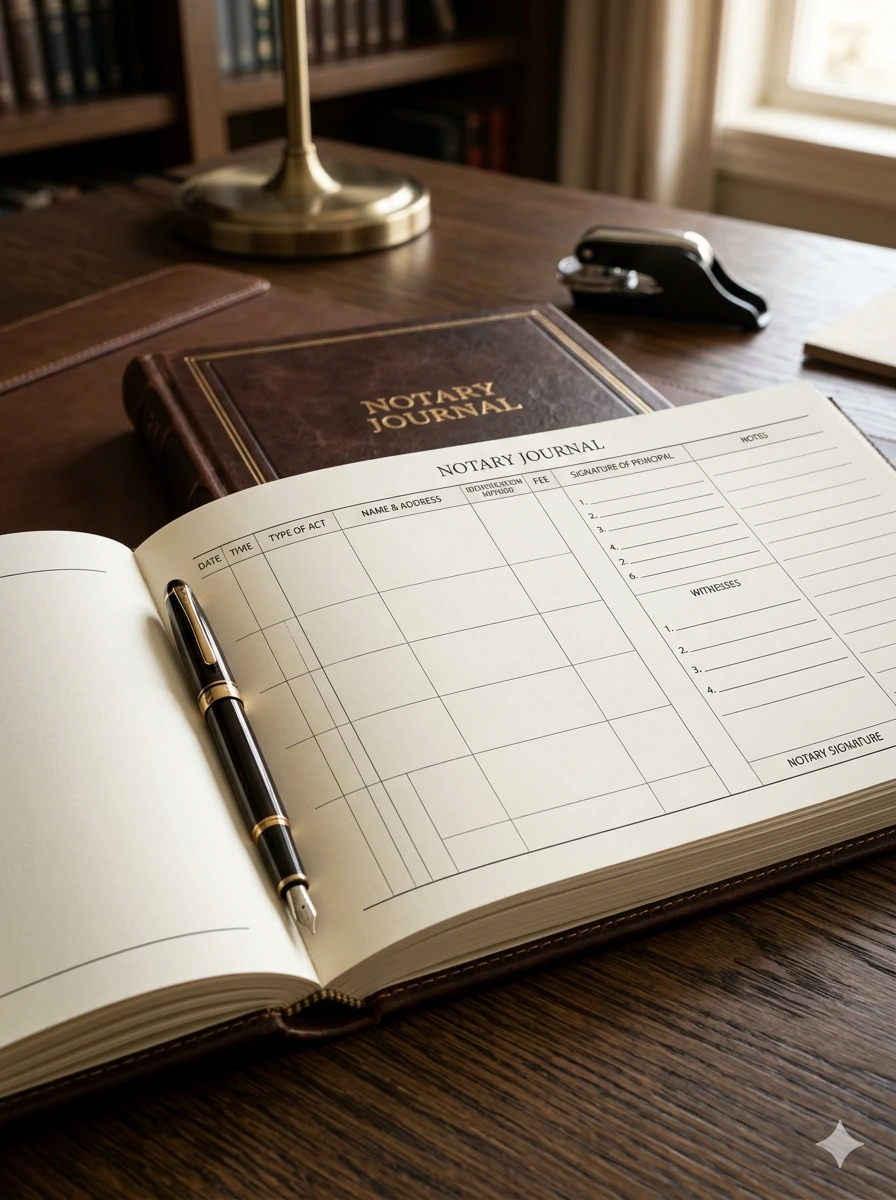
Utah notaries must understand what entries are required in the notarial journal and for how long records must be kept.
ID verification standards
Knowing which forms of identification are acceptable under Utah notary law (Utah Code § 46-1) is a common exam focus area.
Certificate language
Using incorrect or incomplete notarial certificate language is a frequent mistake — study the required wording carefully.
Ready to put these tips into practice?
Start with our free practice questions and see how you perform, then upgrade to access our complete study system.
Free study material download
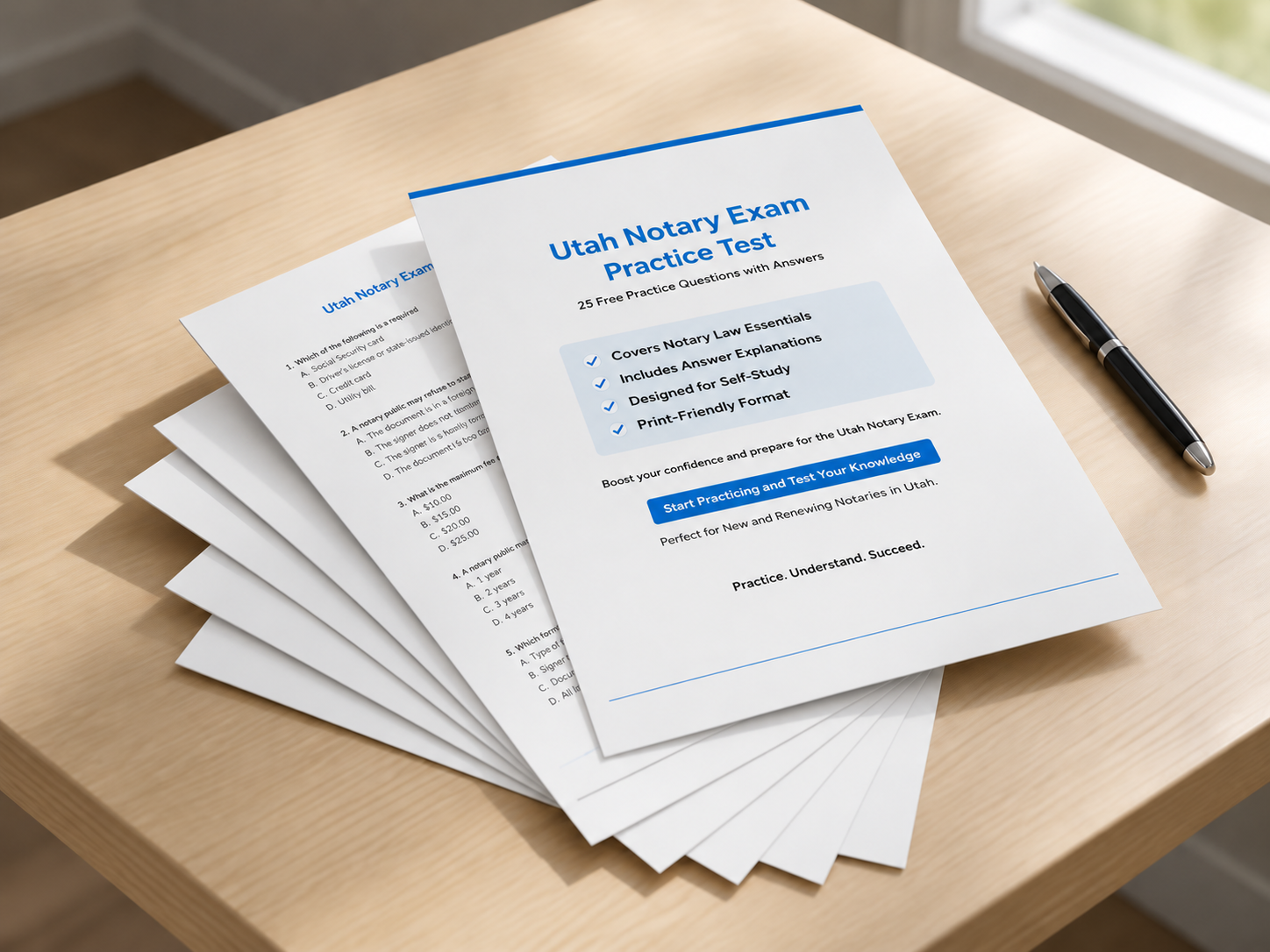
Free Utah Notary Exam Practice Test PDF
Download our comprehensive practice test booklet with 25 Utah-specific questions. Ideal for printing, studying offline, or taking a mock exam.
- 25 exam-style questions based on state-specific notary rules
- Answer key included for every question
- Updated for 2026 using current exam guidance
- Print-friendly layout for convenient offline practice
Frequently asked questions
Your Questions Answered
Quick answers to the most common questions about the Utah notary licensing exam
How do I become a notary public in Utah?
To become a Utah notary, you must be at least 18 years old, a legal resident of Utah, and able to read and write English. You apply through the Utah Lieutenant Governor's office, pay the $30 application fee, and obtain a $5,000 surety bond. No exam is required for initial appointment.
What topics should I study for my Utah notary commission?
Key topics include Utah notary statutes (Utah Code § 46-1), types of notarial acts (acknowledgments, jurats, oaths and affirmations, copy certifications), proper signer identification, journal requirements, electronic notarization, and penalties for notary misconduct.
How long is a Utah notary commission valid?
A Utah notary commission is valid for 4 years from the date of appointment.
How much does it cost to become a Utah notary?
The Utah application fee is $30. You must also obtain a $5,000 surety bond (typically $30–$50) and purchase a notary seal/stamp. Total startup costs are generally under $125.
Can Utah notaries perform remote online notarization?
Yes. Utah authorizes remote online notarization (RON). Utah notaries must register as electronic notaries and use a state-approved RON platform to perform notarial acts for signers who are not physically present.
What are the steps to become a Utah Notary Public?
An applicant must meet Utah’s age, residency or employment, immigration-status, and English-language qualifications; study for and pass the online exam; complete the background check; and submit the application with a notarized oath and compliant bond. The name on the application, bond, oath, commission, and eventual stamp should match exactly.
What happens if I fail the Utah notary exam?
The current process charges a separate retesting fee for another attempt, and the retest opportunity is tied to the 30-day period beginning with the first test. Applicants should review the official study guide, 2026 supplement, and Utah Code before paying for another attempt.
How long does a Utah commission last, and is a bond required?
A Utah notary commission lasts four years and requires a $5,000 notarial bond plus a notarized oath of office. Utah treats the next term as a reapplication rather than a simple renewal, and the bond protects the public—not the notary—from losses caused by a breach of duty.
Free practice tests
Know the Questions Before You Take the Test
Questions are manually curated by our content team using official Secretary of State exam outlines and study materials. We adhere to strict Editorial Standards to ensure accuracy. Each question covers topics from the Notary Public exam — so you practice with questions that closely mirror the actual PSI licensing exam.

General Information
19 questions

Notarial Acts
56 questions
Misconduct & Fines
13 questions
Notarial Definitions
13 questions

Record Book
4 questions

Full Question Bank
200+ exam-like questions

Hard Questions
Tricky questions people miss
Proven exam preparation
Built for One Goal: Pass the Notary Exam on Your First Try
Practice what the state actually tests — notary law and ethics.
3 Full-Length Practice Tests Included
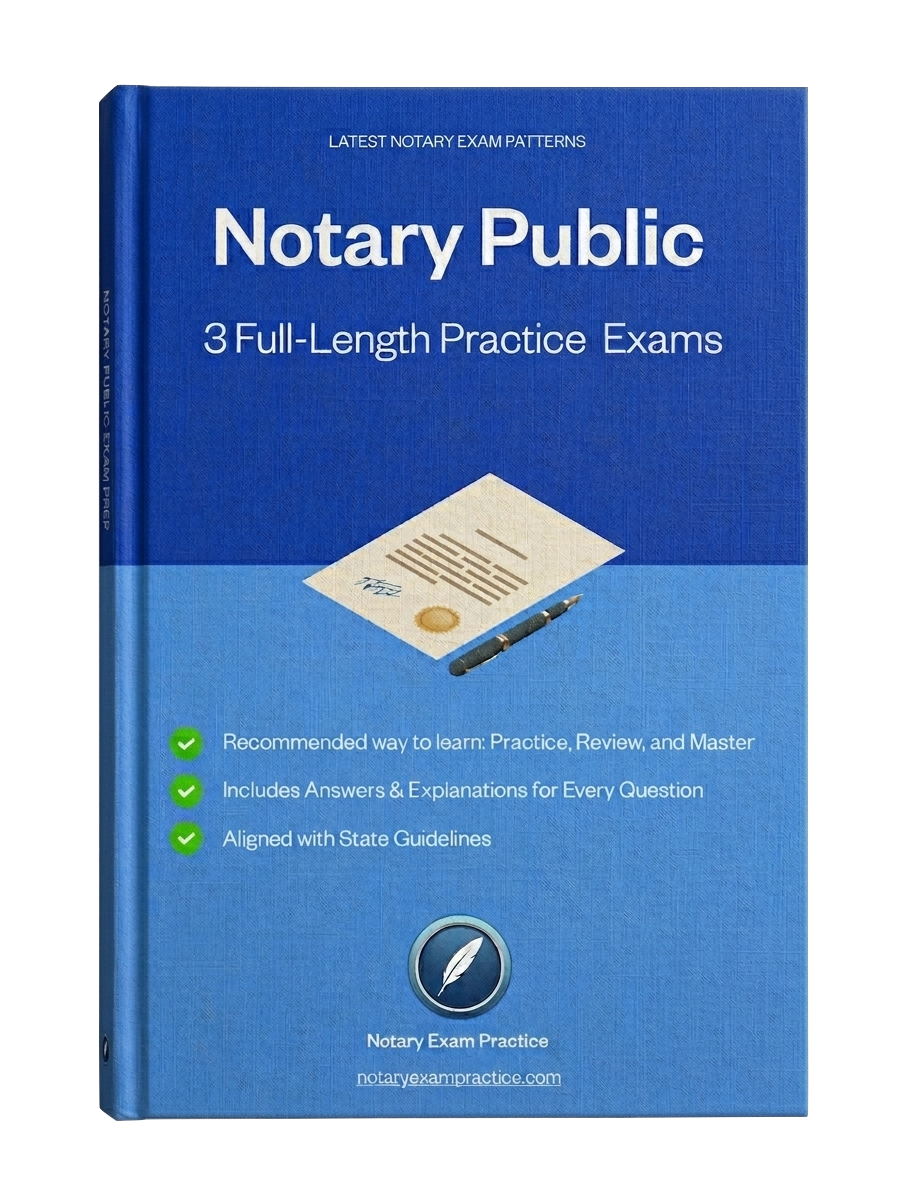
Get instant access to our printable 90-question practice exam book. Includes 3 complete notary practice tests — each with 30 questions — plus detailed answer keys with explanations. Perfect for timed practice sessions that mirror the real exam.